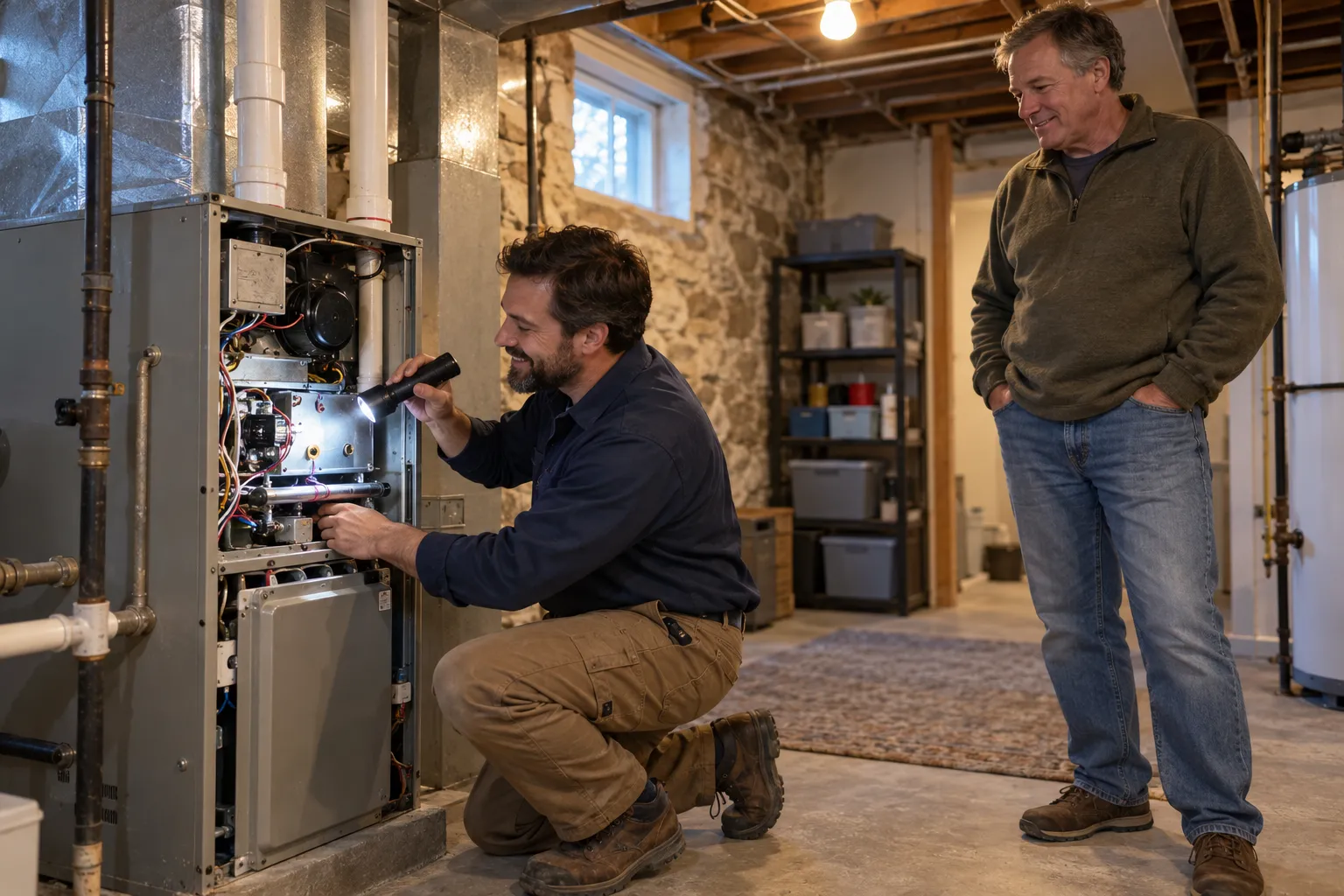
A furnace is the machine that heats your home. It burns fuel or uses electric power to make warm air. Fans and ducts then push that air to each room. When one part fails, the whole system can stop.
Expertdesigns Heating & Air is a referral service. We do not repair furnaces. We explain the basics in short words, then connect you with independent HVAC providers in our network near Shelton. If you have never dealt with a broken furnace, start here. Start with symptoms, learn what they mean, and take a safe first step. Many homes in the Shelton area are older, and cold snaps are hard on aging heaters.
Smell Gas? Stop and Read This First
Some furnaces burn natural gas. Gas has a rotten-egg smell. If you smell it, act fast.
- Leave the house with your family and pets.
- Do not flip switches or use a lighter.
- Call your gas company or emergency services from outside.
Also watch for a carbon monoxide alarm. Carbon monoxide, or CO, is a gas you cannot see or smell. It can make you sick. If the alarm sounds, get outside and get help.
Safe Is Safe. Then Think About Repair
Once the air is clear and the gas company says it is fine, you can think about repair. A provider can inspect the furnace and tell you what is wrong.
Quick Checks Before You Call
Some fixes take a minute. Try these first. They cost nothing but a little time.
Check the thermostat
The thermostat is the wall control. Make sure it is set to heat. Set the temperature a few degrees above the room. Swap the batteries if the screen is blank.
Check the power
Look for a wall switch near the furnace. It looks like a light switch. Make sure it is on. Then check your breaker panel for a tripped breaker.
Check the filter
The filter is a thin panel that catches dust. A clogged one chokes the airflow. Slide it out. If you cannot see light through it, replace it.
Check the fuel
If you use oil or propane, look at the tank. An empty tank is a common cause of a cold house. Many older homes in our region use oil.
Small Signs First: Early Warnings
Furnaces often give hints before they quit. Catch these and you may save a bigger repair.
- Rooms heat unevenly.
- The heater runs longer than it used to.
- Your energy bills creep up.
- The air smells dusty or burnt when it first starts.
- The pilot or burner flame looks yellow instead of blue.
A yellow flame can point to poor burning. Have it checked soon.
Noises That Mean Trouble
Listen to your furnace. It should hum and click softly.
- Banging or popping: may be dirty burners or ductwork expanding.
- Squealing: often a worn belt or motor part.
- Rattling: may be a loose panel or part.
- Constant clicking with no heat: the ignition may be failing.
New noises are worth a call. They rarely fix themselves.
Short Cycling and Cold Air
Short cycling means the furnace turns on and off again and again. It can come from a dirty filter, a bad sensor, or overheating. If the furnace blows cold air, the burner may not be lighting. Either problem calls for a pro.
What Happens During a Repair Visit
Knowing the steps helps you feel calm. Here is what to expect.
You describe the problem
Tell the provider what you saw, heard, and smelled. Mention when it started.
The provider inspects the system
They check the thermostat, power, burners, igniter, blower, and vents. They may test for gas leaks and CO.
You get a written quote
The provider explains the problem and the price. Ask for it in writing before work starts.
The repair happens
Small jobs often finish in one visit. A part that must be ordered can take longer.
Common Furnace Repairs
- Igniter or pilot: the part that lights the flame.
- Flame sensor: a small rod that confirms the flame. Soot can blind it.
- Blower motor: the fan that moves warm air.
- Thermostat: the control on your wall.
- Draft or inducer motor: pulls exhaust out of the furnace.
- Heat exchanger: the metal part that heats the air. A crack here is serious.
Cold Weather Makes Things Worse
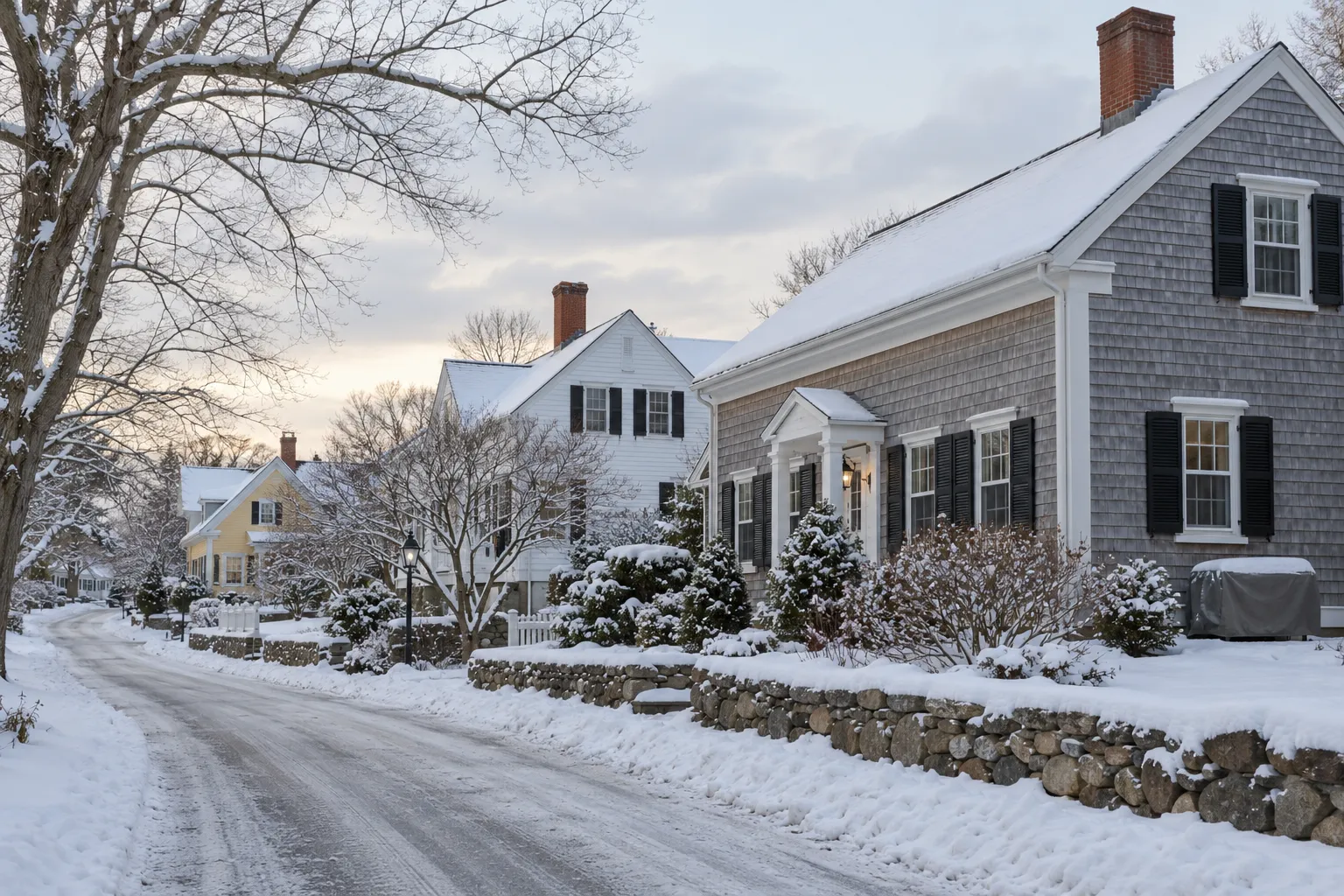
Hard winters push furnaces to run longer. In freeze-thaw weather, a vent or chimney can clog with ice or snow. Clear snow from outdoor vents, and keep the area around them open. Older homes with full basements may have long duct runs that lose heat. A provider can spot weak points.
Repair or Replace Your Furnace?
There is no single rule, but these clues help.
- The furnace is more than about 15 to 20 years old.
- Repairs keep coming back.
- A repair quote is close to half the price of a new unit.
- The heat exchanger is cracked.
If most of these fit, ask a provider about furnace replacement. Compare the quote for each choice in writing.
Questions to Ask the Provider
- Can you explain the problem in plain words?
- Is the quote in writing, with parts and labor listed?
- Does the repair come with a warranty on parts or work?
- Are you licensed and insured in my state?
- What should I do to prevent this next time?
Good providers answer without hurry. If you feel rushed, you can ask another provider.
Keep the Furnace Healthy
A yearly tune-up helps catch small issues. Change the filter every one to three months in winter. Keep vents clear of furniture. These habits make HVAC service calls rarer.
Your Next Step
If your heating and cooling system has failed or is acting up, start with the checks above. Then ask a local provider to look. You can also request an estimate and compare options.
What's Included
Diagnosis
A provider checks the thermostat, power, burners, and airflow to find the real reason your heat stopped.
Part Repairs
Common fixes include igniters, sensors, and blower motors, depending on what the inspection finds.
Safety Checks
Providers can look for gas leaks, exhaust problems, and carbon monoxide risks around the furnace.
Clear Quotes
Ask for a written quote that lists parts and labor, so you know the price before work begins.
What Furnace Repair Costs
Prices change with the part, the furnace type, and your home. These are typical U.S. ranges only. Always ask the provider for a written quote before work starts.
| Repair item | Typical range | Notes |
|---|---|---|
| Diagnostic visit | $75 – $200 | Often applied toward the repair |
| Thermostat replacement | $100 – $350 | Depends on the model |
| Igniter or flame sensor | $150 – $500 | Common, smaller repair |
| Blower motor | $400 – $1,500 | Varies by motor type |
| Inducer motor | $400 – $1,200 | Moves exhaust out |
| Heat exchanger repair | $1,500 – $3,500 | Often leads to replacement talk |
How It Works
Check Safety First
Smell gas or hear a CO alarm? Go outside and get help before anything else.
Try Quick Checks
Look at the thermostat, power switch, filter, and fuel. Small fixes sometimes work.
Reach a Provider
Request a callback to check provider availability, or use the request form.
Compare the Written Quote
Read the price and plan. Ask questions before you say yes to any work.
Why Call Expertdesigns Heating & Air
Plain Words, No Jargon
We define each trade term in a few words so you understand your choices.
Local Providers
Connect with independent HVAC providers who serve homes near you.
No Obligation
Requesting an estimate does not commit you to hiring anyone.
Calm First Step
Learn what to check and then reach a provider at your pace.
Other Services
Need residential furnace repair in Shelton?
Tell us what your system is doing. Send a short request to contact@expertdesigns.property and ask for an estimate from a local provider. There is no obligation.
No obligationResidential Furnace Repair FAQ
Why is my furnace running but not heating the house?
Check the thermostat setting and the filter first. A clogged filter, a bad igniter, or a failed sensor can all cause this. If the simple checks do not help, ask a provider to inspect it.
How do I know if my furnace is leaking carbon monoxide?
You cannot smell it, so use CO alarms on each floor. If one sounds, go outside and get help. Have a provider inspect the furnace before using it again.
Should I repair or replace an old furnace?
Age and repair cost matter. A unit over about 15 to 20 years old with frequent repairs may be worth replacing. Compare written quotes for both options.
Request a callback
Tell us what your system is doing. Send a short request to contact@expertdesigns.property and ask for an estimate from a local provider. There is no obligation.
No obligation